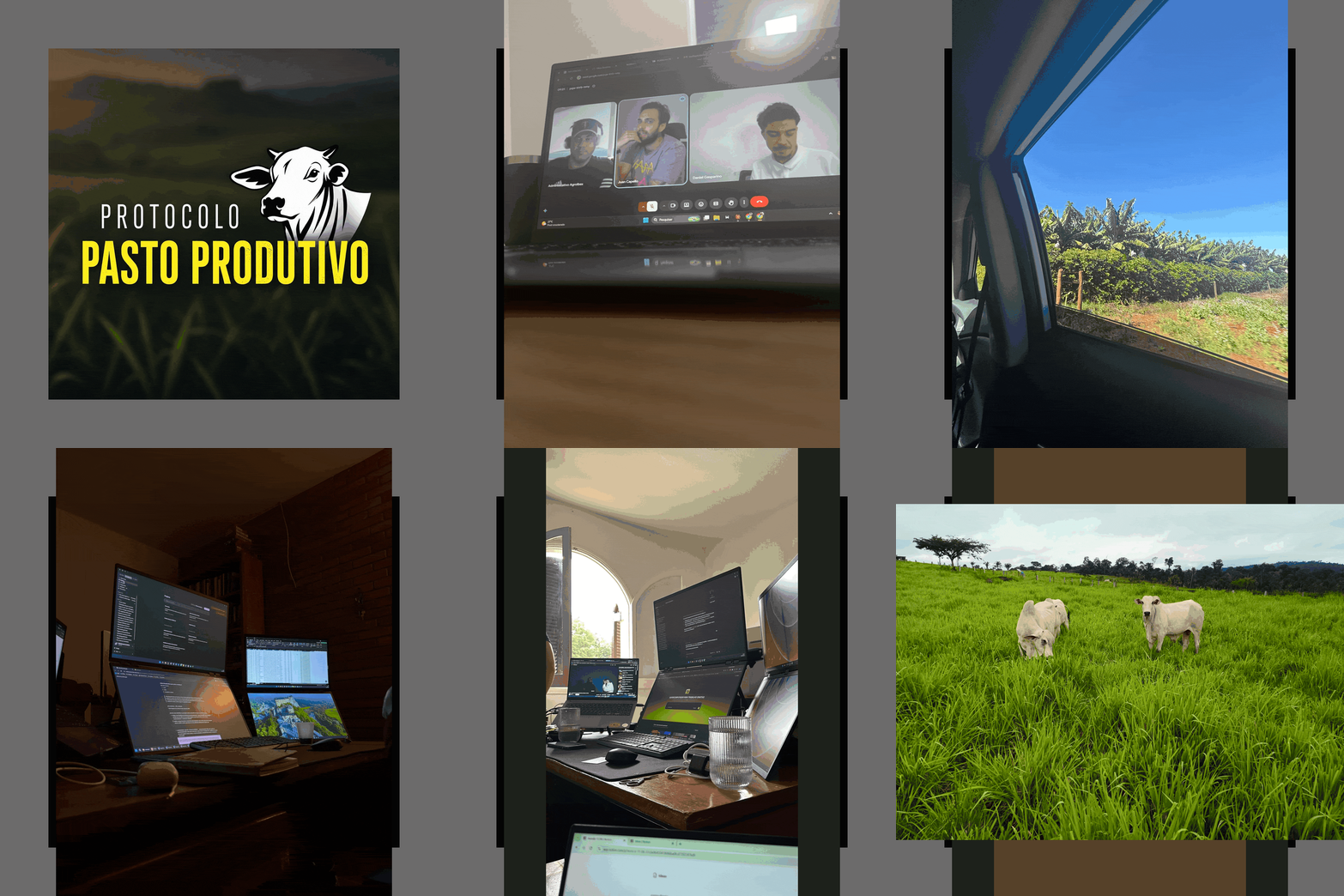
Protocolo Pasto Produtivo (PPP): a downsell offer presented to leads who attended the main pitch but didn’t convert into the flagship product. Daniel took ownership of the offer as product owner — structuring the communication flow and sales process for this bimonthly downsell window (~1 month per cycle). In his first cycle managing it, the offer hit a record of 220 sales, surpassing the previous historical ceiling of under 200.
Programa Acelerador de Arrobas (PAA): the flagship bimonthly launch product. Daniel led creative strategy and demand-generation management — ensuring the best-performing creatives captured qualified, CT/MQL-aligned demand — and rebuilt the project’s management process from near-zero structure into a repeatable operational system. In the July/26 launch, R$232K invested in paid traffic generated 21,981 leads, converting into 194 new students and R$524,945 in gross revenue (2.26x gross ROAS).
Product Ownership & Offer Structuring
Creative Strategy & Demand Generation
Project Management Implementation
Launch Communication Design
Falconi Management Methodologies
Vibe Coding, Automations and Claude Code Agents
Paid Media Structural Analysis (based on Meta’s Andromeda best practices)
PPP hit a record 220 sales in its first cycle under Daniel’s ownership — the highest volume the offer had ever produced
PAA’s July/26 launch converted 21,981 leads into 194 new students, generating R$524,945 in gross revenue at a 2.26x gross ROAS (R$232K invested)
Rebuilt PAA’s project management process from scratch, establishing routines that improved creative performance tracking and launch execution
Implemented Falconi management methodologies to establish routine monitoring and data analysis, enhancing overall operational capacity
My generation is used to having everything instantly, but you need to learn patience
Having clarity on each team member’s responsibilities prevents misunderstandings
Managing people who just want to “push buttons” doesn’t work. You need to find people who want to get involved beyond the operational side, to build a self-managed team
Always keep tasks clearly marked as in progress, paused, or completed — both for yourself and for others
Culture isn’t what you say it is. Rather, it is what you cultivate on a day-to-day basis, even if you don’t cultivate anything
Organizing principles, clarity, discipline, and rituals is what makes the work you and others do flourish and gain more value as the exchange happens among the team. If you don’t have that sense of team, that communion around a vision or a simple project, the work you and others do will become more difficult and sluggish